Researched October 2026 — not yet hands-on tested by the Hub
iBill talking money identifier
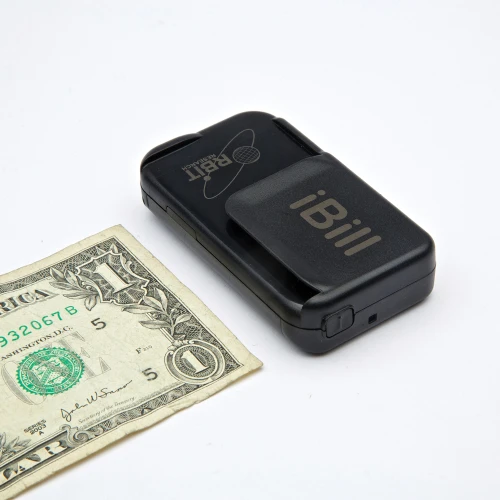
The verdict: U.S. bills are all the same size and feel — the only country quirk that makes a $1 and a $20 indistinguishable by touch. The iBill fixes it: slide a bill corner in, press the button, hear “five.”
Made by Orbit Research and keyring-sized, it also offers tone and vibration modes — vibration matters at a noisy register and for deaf-blind users — plus an earphone jack so a stranger at the checkout doesn’t hear your money. Retail is $119, but read this before paying it: the U.S. Bureau of Engraving and Printing has distributed the iBill free to eligible blind Americans. Phone apps like Seeing AI and Cash Reader identify bills too; the iBill’s edge is that it works with no phone, no light, and no signal.
The blind-specific details
| Works without sight | Yes — voice, tone, or vibration output for every denomination. |
|---|---|
| Setup without sighted help | None. One button, instant answer. |
| Controls you can feel | A single button, on a unit small enough for a keyring. |
| Watch out for | Pair it with a folding system — identified bills still need a home: ones folded one way, fives another, in separate wallet slots. The iBill tells you what you’re holding; the system keeps it straight afterward. |
- Price
- $119 retail; free to eligible blind Americans through the Bureau of Engraving and Printing program.
- Rating
- Specialty product — not typically rated on Amazon. Reviewed by the American Foundation for the Blind.
Ready to buy?
You’ve read the blind-specific part first — that’s the point of this page. The sellers are the exit:
Read the American Foundation for the Blind’s iBill review (opens in a new tab) (opens in a new tab)
Blind-owner reviews
No reviews yet — write the first one. Every review is read by a human before it appears.